Winners announced in 2021 Garden Competitions
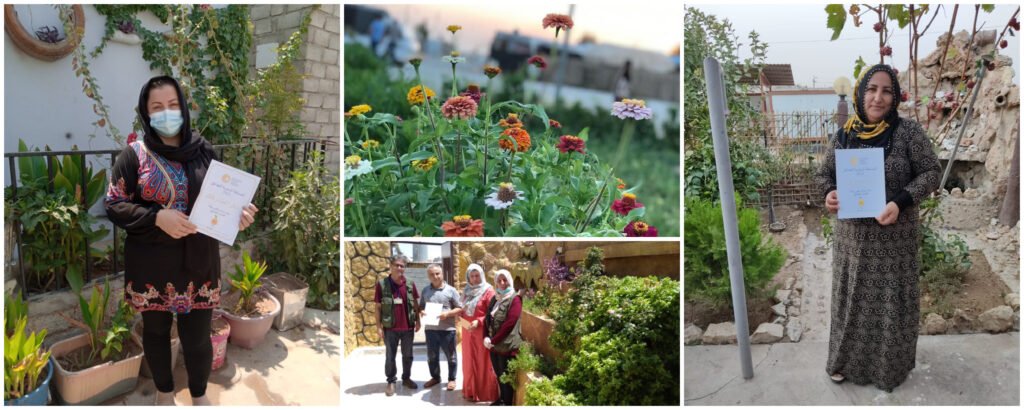
We have awarded prizes to 72 winning gardens in our 2021 Lemon Tree Trust (LTT) annual garden competitions. LTT competitions took place in a record nine camps in the Kurdistan Region of Iraq (KRI), despite ongoing Covid-19 restrictions. Winners have received cash prizes and gifts of seeds and plants, and all participants have received certificates.
A record number of people reached
Two new camps took part in our competitions this year. Bersive 1 and Bersive 2 are both in the north of the region and are home to nearly 16,000 displaced people from other parts of Iraq.
Rody Sher, Lemon Tree Trust Country Director in Iraq, said:
“People across the region, and particularly those living in refugee and IDP* camp communities, are still struggling with daily life in the wake of the Covid-19 pandemic. This year, in addition to other challenges, we have experienced severe hot weather and very little rainfall. It’s fantastic that so many people are choosing to create gardens to improve their environment for families and neighbours.
Gardens provide shade, improve the air quality in camps and are a way for people to grow food and flowers. But most importantly for us, we know they can improve mental health and provide people with purpose and hope. Our garden competitions attract more people every year and we are already planning how we can bring them to even more people in 2022.”
*Internally Displaced Person
Why garden competitions?
We have been running garden competitions in camps in the KRI since 2016. In our first year, we received just 50 entries in Domiz 1 camp but since then, thousands of gardens have been created across the region, many thanks to our regular seed and tree distribution.
In 2020, due to the Covid-19 pandemic, our competitions moved online with promising results. This year we successfully trialled a hybrid of virtual and in-person competitions. Garden competitions help us connect with people living in displaced communities. Our camp teams choose the winning gardens, awarding prizes across a range of garden types. Growing conditions in camps can be limited and often harsh, but people are creative and resourceful, repurposing containers for growing vertically and using all available space. We encourage people to swap seeds and cuttings with neighbours to increase the diversity of plants grown in camps.
Lemon Tree Trust garden competitions in the KRI are coordinated by Aveen Ibrahem, LTT Operations Manager who lives in Domiz 1 camp. She manages a team of camp coordinators across the region who distribute seeds and plants and encourage people to create home and community gardens. Aveen says:
“Our competitions bring people joy and this is what makes them so successful. Life in a camp can be difficult and over the past 18 months many people have lost their jobs. We encourage people to create home gardens, and support them to grow plants that remind them of home. By growing trees and plants here, we are putting down roots and growing new homes for ourselves and our families.”
For more images of winning gardens and the full list of 2021 winners, visit our Instagram or Facebook profiles.
Alternatively, browse our photo albums on Flickr.


The 2026 Lemon Tree Trust Cooking Competitions have brought together people from different cultural backgrounds to share the dishes and food traditions that are important to them this October. Across the Kurdistan Region of Iraq, our annual competition fixture continues to celebrate the diversity of local communities, while supporting people to connect through growing, preparing … Continued

Harvest time can be a good opportunity to get together, share what we are growing, making or cooking and raise funds for Lemon Tree Trust. Whether you share homegrown produce, enjoy a meal with friends or organise a garden gathering, there are plenty of simple ways to bring people together and support our work. Whether … Continued

Lemon Tree Trust supporter Katie Cox recently raised £1,000 for our work, plus £250 in Gift Aid, by organising an arts and crafts fundraising event at her home and in her garden. Katie is pictured above wearing a rather fabulous green shirt covered in lemons. Katie’s donation was made during our Tree & Plant Appeal, … Continued